
How to Display a Sword at Home
RAVEMORN guides · Updated
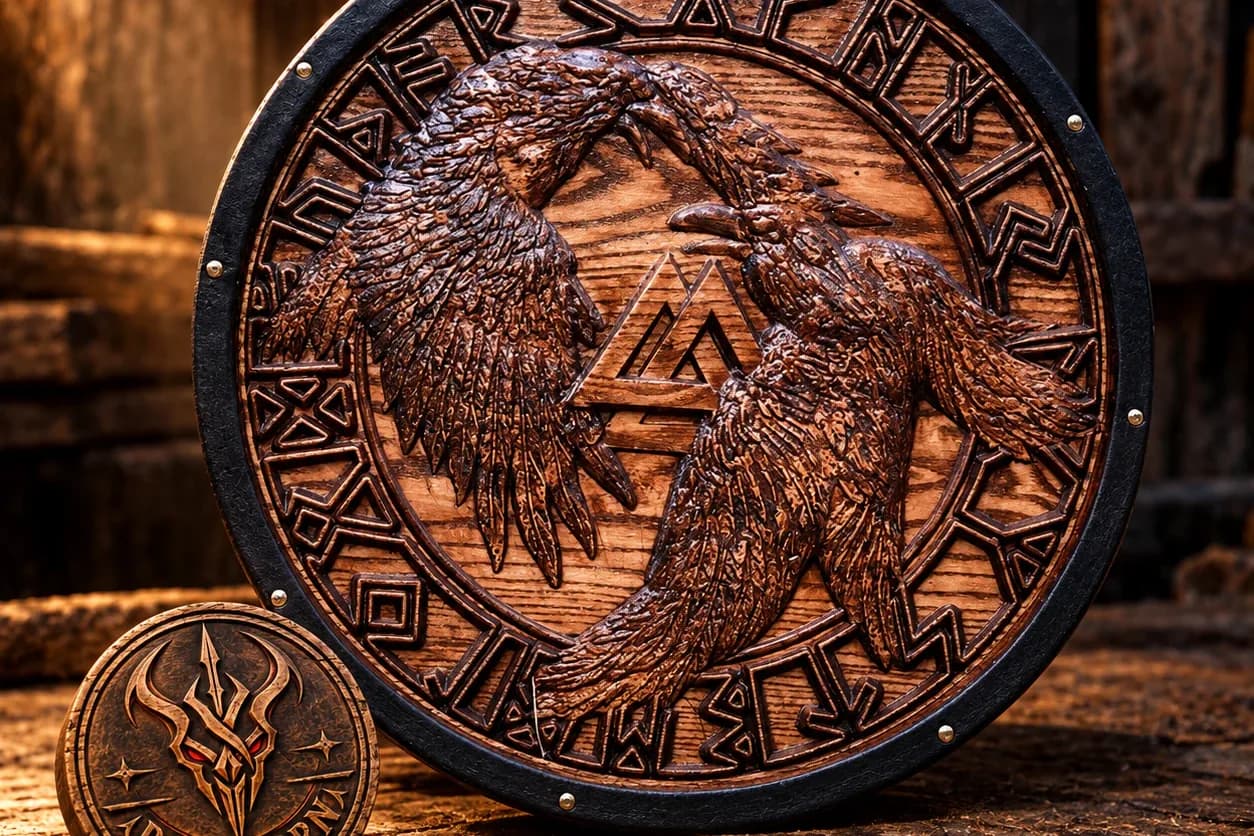
A sword on the wall changes a room. Done well, it looks deliberate — a centrepiece rather than something leaning in a corner. Done badly, it ends up crooked, dusty, or on the floor. This guide covers where to put a display piece, the main ways to mount it, how to handle spears, axes and shields, and the few safety points that matter most.
Start with the spot
Before you buy a mount, decide where the piece will live. The right place is one that keeps it looking good for years and keeps it out of the way of everyday life.
- Avoid direct sunlight. Strong sun fades leather, cord grips and wood stain, and heats metal unevenly.
- Keep it away from radiators, fireplaces you actually use, kitchens and bathrooms. Heat dries out wood and leather; steam and cooking vapour leave a film on metal and encourage rust.
- Stay clear of doorways and narrow corridors where people, bags or doors can knock it.
- Hang it at or just above eye level. That is where the detail on a guard or a carved shield is easiest to see — and higher than small children can reach.
- Don't hang a heavy piece directly above a bed, a sofa or anywhere people sit.
Wall mounts
A wall mount is the most common way to display a sword, and the most space-efficient. There are three layouts worth knowing:
- Horizontal, on two pegs or hooks. The classic look: the sword lies flat with one support under the guard end and one towards the tip. It suits longswords and anything with a wide cross-guard.
- Vertical, on a single bracket. The sword hangs point-down from a hook that holds it under the guard. It takes less wall width, which helps in hallways and between windows.
- Crossed behind a shield. Two swords — or a sword and an axe — crossed behind a round shield is the traditional great-hall arrangement, and the shield hides most of the hardware.
Whatever the layout, the fixing matters more than the mount. Screw into a wall stud where you can; on plasterboard or drywall, use anchors rated for the weight, with a good margin to spare. Use a spirit level — a sword a few degrees off horizontal is surprisingly noticeable. Hooks lined with felt or rubber stop metal fittings scratching the blade or the scabbard.
Stands for a table, a shelf or the floor
If you rent, or you don't want holes in the wall, a stand does the same job. A single vertical stand holds one sword upright by the guard or the scabbard and looks good on a sideboard. Tiered horizontal racks hold two or three blades one above another — check that the cradles are wide enough for a broad cross-guard before you buy, because many racks are sized for slim-guarded swords. Shorter pieces such as a knife in its sheath or a short spear look best on a small desk stand at eye level.
In or out of the scabbard?
A sword shown out of its scabbard, with the scabbard mounted just below it, shows off both — and it is better for the blade. Leather draws in and holds moisture, so a blade left sheathed for months can develop spots where it touches the leather. If you prefer to display a sword sheathed, take it out and check it every few weeks.
Displaying spears, axes and shields
- Spears are long, so they usually look best horizontal on two brackets — above a doorway, along a hallway or over a long sideboard. Upright in a corner stand works too, as long as the base is weighted and nobody will brush past the head. A spear with a two-piece shaft can be displayed assembled or as two pieces on a shelf.
- A hand axe sits naturally on two pegs, one under the head and one near the end of the handle, or crossed with a sword. The etched or carved face of the head should face the room.
- A shield is the anchor of a display. Hang it from a strong hook or a purpose-made shield hanger through the back, centred on the wall, and arrange blades around or behind it. Round wooden shields are heavier than they look; use a fixing rated well above their weight.
Our carved Viking shield with a rune-etched axe and a Viking short spear makes a complete Norse wall; a medieval longsword above a mantel is the simplest display there is.
Cases and shadow boxes
A glass-fronted case keeps dust off and fingers away, which is useful in a busy room or a house with children. The one thing to watch is moisture: a case closed up in a damp room traps damp air with the metal. Put a sachet of silica gel inside, replace it when it changes colour, and open the case to wipe the piece over now and then.
Lighting
Light from slightly above and to one side brings out engraving, etching and carving far better than light from straight ahead. LED spotlights or strip lights are ideal because they give off very little heat. Keep any lamp a sensible distance from leather and wood, and avoid placing a display where afternoon sun will cross it.
Safety
- Treat every blade as sharp, whether or not its edge has been sharpened.
- Mount it securely and check the fixings once in a while — especially after moving furniture or decorating.
- Keep blades out of reach of children, and make sure visitors know a piece is for looking at.
- When you take a piece down, lift it by the grip and support the blade; don't run your fingers along the edge.
- Laws on owning and keeping bladed items differ between countries and states. Check the rules where you live.
A quick checklist
- Pick a spot out of the sun, away from heat and steam, at eye level and out of traffic.
- Choose a layout: horizontal, vertical, crossed behind a shield, or a stand.
- Fix into a stud, or use anchors rated well above the weight.
- Use lined hooks, and level it.
- Display the blade out of its leather scabbard, or check it regularly.
- Wipe it over and re-oil it every few months — see our care guide.
Looking for a centrepiece? Browse ceremonial swords, fantasy swords or the whole collection.